
TSS·WPC
WPC Cladding
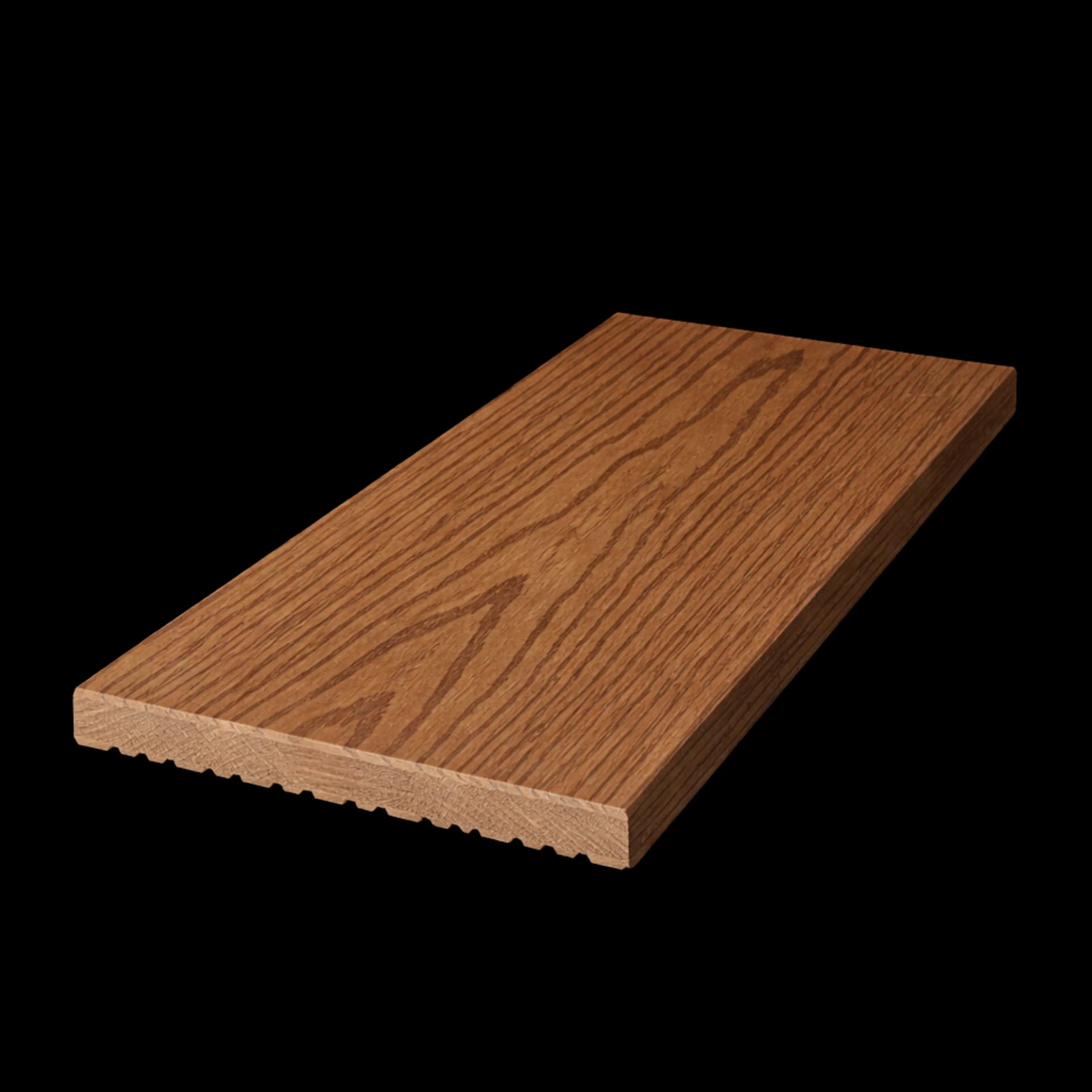
WPC Solid Cladding
Dense, hard-wearing boards.
WPC Solid Cladding is engineered for façades that take punishment. With a fully solid core rather than a hollow chamber, each board carries more material per metre, giving it the density, impact resistance and dimensional stability demanded by high-traffic frontages, ground-level walls and exposed elevations. The wood-plastic composite combines cellulose fibre with a stabilised polymer matrix and UV-resistant pigments, so the wood-grain surface resists fading, splitting and the seasonal movement that troubles natural timber.
WPC Solid Cladding is engineered for façades that take punishment. With a fully solid core rather than a hollow chamber, each board carries more material per metre, giving it the density, impact resistance and dimensional stability demanded by high-traffic frontages, ground-level walls and exposed elevations. The wood-plastic composite combines cellulose fibre with a stabilised polymer matrix and UV-resistant pigments, so the wood-grain surface resists fading, splitting and the seasonal movement that troubles natural timber.
Because the core is continuous, these boards absorb knocks and point loads that would dent or crack lighter profiles, while remaining stable through wet-dry and freeze-thaw cycles. They will not rot, will not feed termites and need no painting, oiling or sealing over their service life — only routine washing. The result is a finishing material that holds its line and colour year after year in real climates.
Supplied across Europe, North America and beyond, WPC Solid Cladding is manufactured to EN 15534 and CE-marked, with reaction-to-fire classification to EN 13501-1 and full technical documentation available for specification, tender and customs.
- Core
- Solid (continuous, non-hollow)
- Material
- Wood-plastic composite (cellulose fibre + stabilised polymer)
- Finish
- Embossed wood grain
- Use
- Exterior grade — ventilated façade / cladding
- Density
- Typical 1.25–1.35 g/cm³
- Reaction to fire
- Typical Class B-s2,d0 to EN 13501-1 (grade-dependent)
- Water absorption (24 h)
- Typical ≤ 1.5%
- Thermal expansion
- Typical 30–50 µm/m·°C
- Thermal conductivity
- Typical 0.20–0.30 W/m·K
- Impact resistance
- High — no surface damage at typical falling-mass test loads
- Flexural strength
- Typical ≥ 20 N/mm²
- Slip / surface
- Embossed, low-glare grain
- Service temperature
- Typical −30 °C to +60 °C
- Wood content
- Typical 55–60% by weight
- Weight
- Typical 4–6 kg per linear metre (profile-dependent)
- Colour stability
- UV-stabilised; limited initial tonal settling, then stable
▸Exposed façades
Dense solid core holds colour and line on fully weather-exposed elevations through wet-dry and freeze-thaw cycles.
▸Commercial exteriors
Impact-tough boards suit retail, hospitality and public-building frontages where knocks and high footfall are routine.
▸Feature walls
Wood-grain finish delivers a warm timber look for entrances, signage walls and accent elevations without timber upkeep.
▸Fencing
Solid section gives the rigidity and termite resistance needed for boundary screens, gates and privacy walls.
▸Balcony and terrace screens
Stable, low-maintenance boards for balustrade infill and outdoor screening exposed to sun and rain.
▸Ground-level cladding
Hard-wearing surface stands up to impact and splash zones at base courses and plinth lines.
▸High impact strength
The continuous solid core resists dents and cracking from knocks and point loads better than hollow profiles.
▸Dimensionally stable
Low, predictable thermal movement keeps joints tight and lines straight across the seasons.
▸Termite proof
The polymer-bound composite offers no food source for termites or wood-boring insects.
▸Long life
Will not rot, warp or splinter, and needs no painting, oiling or sealing — only routine cleaning.
▸UV-stabilised colour
Pigments and UV inhibitors hold the surface tone after initial settling, resisting fade on sun-exposed walls.
▸Moisture resistant
Low water absorption keeps the board stable in rain, splash and high-humidity exposure.
EN 15534 (Parts 1, 4 & 5)
Characterisation and requirements for wood-polymer composite (WPC) profiles and cladding — mechanical, swelling, water-resistance and durability test methods.
EN 13501-1
Reaction-to-fire classification of construction products; this board is typically classified Class B-s2,d0 (grade-dependent).
ASTM D7032
Standard specification for establishing the performance ratings of WPC and plastic-lumber decking and cladding boards (US equivalent).
CE marking
Declared performance and conformity for placing the product on the European market in line with the applicable harmonised provisions.
ISO 9001
Quality management system governing manufacture, batch traceability and consistent product output.
- ▸Install as a ventilated rainscreen on aluminium or treated timber battens, maintaining a continuous air gap behind the boards.
- ▸Leave expansion gaps at board ends and abutments per the fixing guide to accommodate thermal movement; do not pin boards rigidly at both ends.
- ▸Use the matched clip or screw system with corrosion-resistant stainless fixings; pre-drill and counterbore for face-fixed details.
- ▸Acclimatise boards flat and supported on site before installation, and keep batten centres within the spacing stated in the technical data sheet.
- ▸Cut with carbide-tipped tools; de-burr edges and seal exposed cut ends where the fixing guide requires.
- ▸Store flat on bearers, clear of the ground, and keep packs protected and dry until installation.
- Finish
- Embossed wood grain (matt, low-glare)
- Profile
- Solid plank / shiplap and square-edge options
- Colour range
- Natural timber tones — oak, teak, walnut, charcoal and grey (representative)
- Core
- Solid (this product); co-extruded capped solid available to order
- Length
- Standard run lengths, made-to-order cut lengths on request
- Fixing system
- Concealed clip or face-fix screw, supplied to match the profile
Stock profiles and popular wood-grain tones typically ship within a short lead time, while bespoke colours, profiles and cut lengths are made to order with longer planning; indicative lead times are confirmed at enquiry. Representative samples and colour cards are available before commitment, and every order is supported with full documentation — Technical Data Sheet, EN 13501-1 reaction-to-fire classification, EN 15534 test references, Declaration of Performance / CE documentation, care-and-fixing guidance and a product warranty. We supply across Europe, North America and beyond, with export packing, marine-grade protection and complete shipping and customs paperwork prepared for each consignment.
WPC Solid Cladding
questions.
The core is continuous rather than chambered, so the board carries more material per metre. That gives noticeably higher impact resistance, rigidity and a more solid feel — the right choice for high-traffic, ground-level and exposed walls.
Premium solid WPC cladding is typically classified Class B-s2,d0 to EN 13501-1, indicating limited flame spread and low smoke. The exact class is grade-dependent; we confirm the certified classification for the specified product at enquiry.
The boards are UV-stabilised. As with most composite façades there is a slight initial tonal settling in the first weeks, after which the colour holds stable. We can provide samples so you can assess the finish before ordering.
Yes — the polymer-bound composite offers no food source for termites or wood-boring insects and will not rot, making it well suited to fencing, base courses and humid climates.
WPC moves with temperature, so expansion gaps at board ends and abutments are essential. The technical data sheet gives the exact gap and batten spacing for the profile and your local temperature range.
Stock tones and profiles ship quickly; bespoke colours, profiles and cut lengths are produced to order. Share your specification or a reference and we will advise on feasibility, minimum quantities and lead time.
Each order includes the TDS, EN 13501-1 fire classification, EN 15534 test references, Declaration of Performance / CE documentation, warranty and care-and-fixing guidance, with full shipping and customs paperwork for international delivery.
WPC Cladding
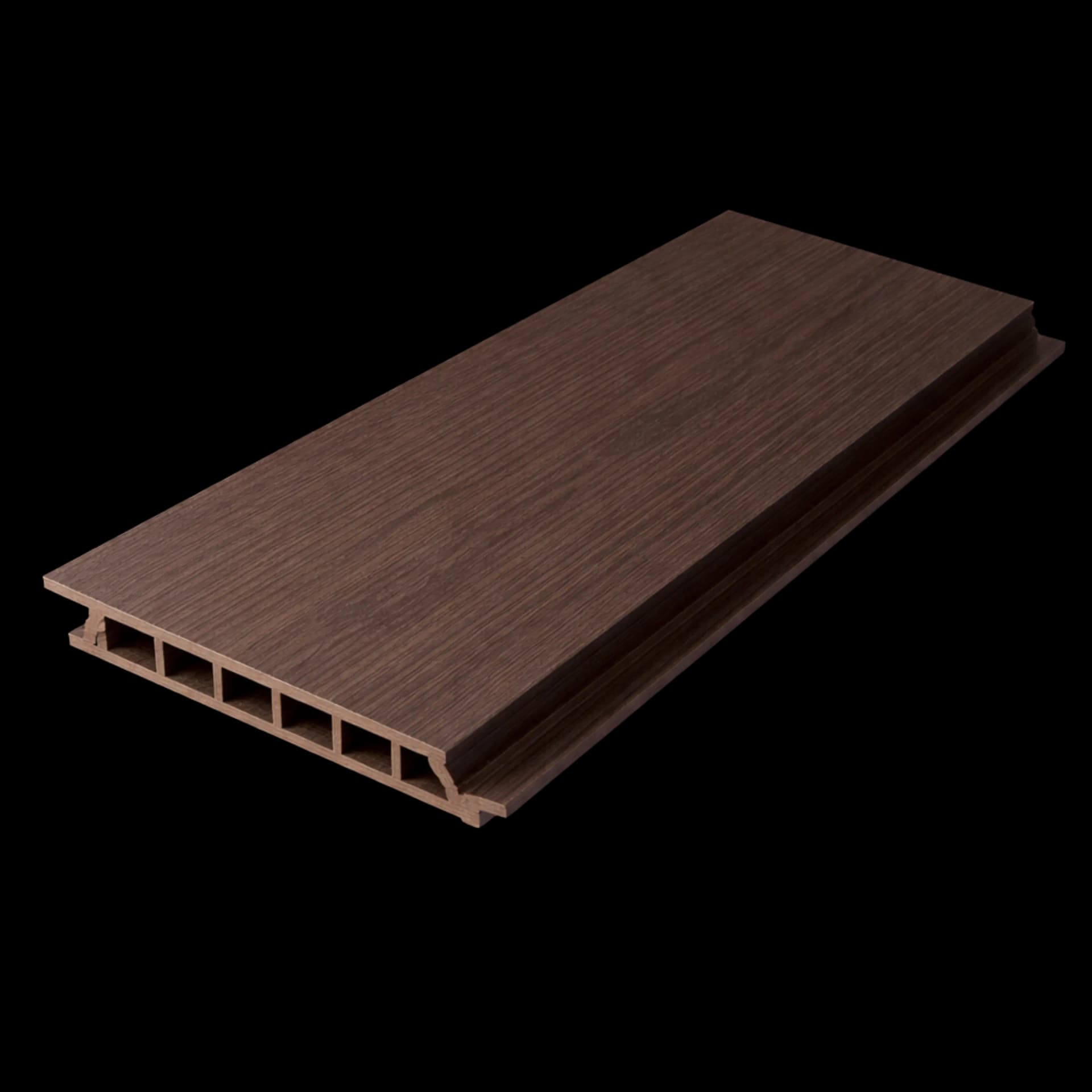
WPC Designer Cladding
Co-extruded wood-plastic composite cladding with a designer profile — the look of natural timber with none of the painting, sealing or rot.
- Profile
- Designer
- Material
- Wood-plastic composite
- Finish
- Co-extruded wood grain
- Use
- Exterior grade
WPC Cladding
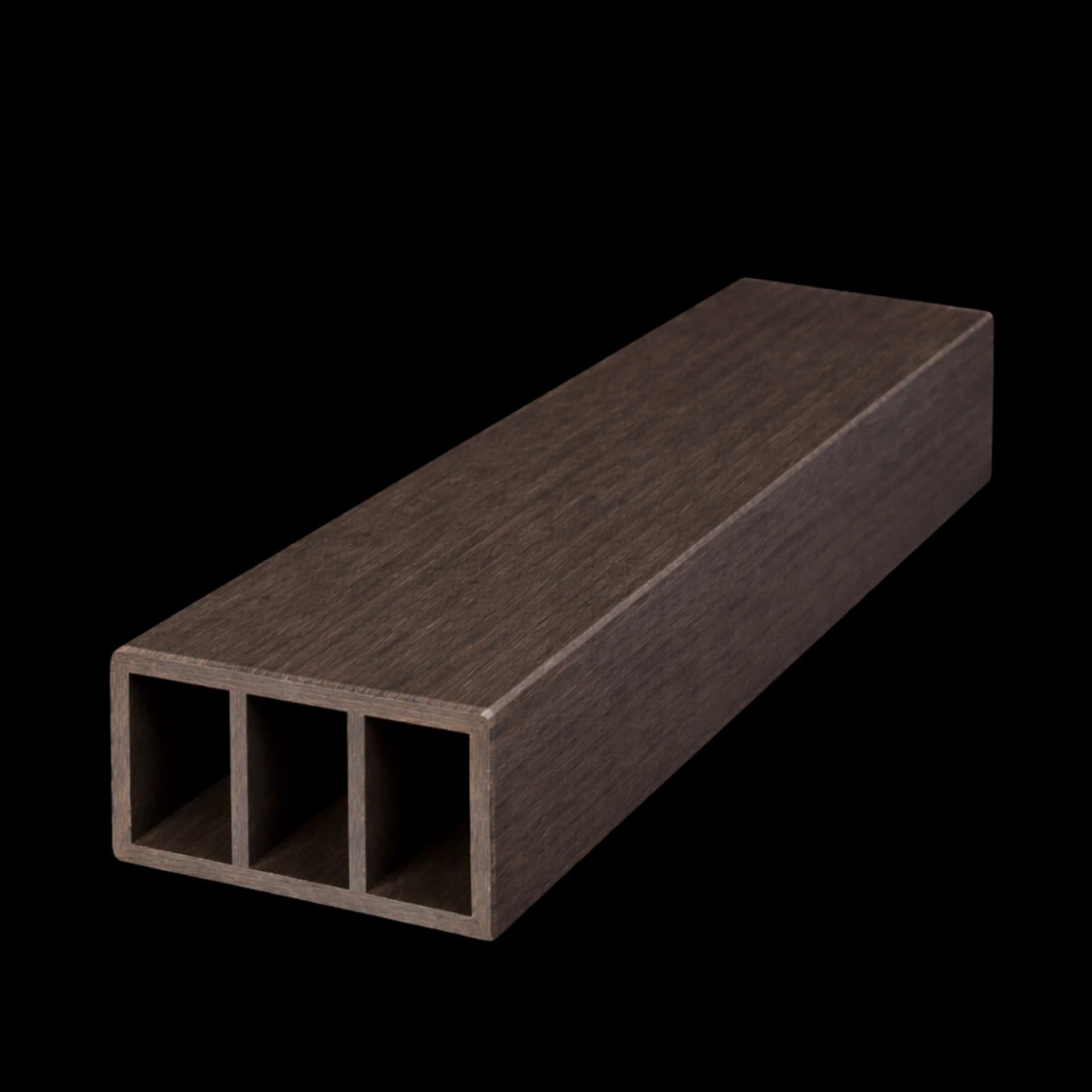
WPC Hollow Cladding
Hollow-section WPC cladding — lighter on the structure and quick to fix over battens, with the same weatherproof composite surface.
- Core
- Hollow
- Material
- Wood-plastic composite
- Finish
- Wood grain
- Use
- Exterior grade